The UK’s plan to get to net zero relies on Bioenergy with Carbon Capture and Storage (BECCS) – burning trees or energy crops and capturing the carbon. The UK Government and Climate Change Committee think the UK will need lots of BECCS to reach net zero.
The UK Government has recently consulted on extending subsidies for bioenergy companies – worth billions of pounds – from 2027 into the 2030s, because those companies have promised to deliver Bioenergy Carbon Capture technology.
But research shows that the UK doesn’t need BECCS electricity to achieve net zero – it can do it without it as long as it is effective at reducing emissions from other sectors.
And BECCS doesn’t help reduce emissions anyway. It only looks like it provides a climate benefit if you completely ignore the impact on the forest. But two independent studies show that if you take into account the impact on stores of carbon in forests then BECCS actually increases the amount of carbon dioxide in the atmosphere. Any CO2 captured at the power station is more than outweighed by stopping the forest from absorbing CO2 for decades.
BECCS would also be incredibly expensive – Ember thinktank estimates that a BECCS plant at Drax would need up to £43 billion of subsidies over its 25 year lifetime.
Resources
Explore these links to discover more about carbon capture.
Net Zero and Beyond: What Role for Bioenergy with Carbon Capture and Storage?
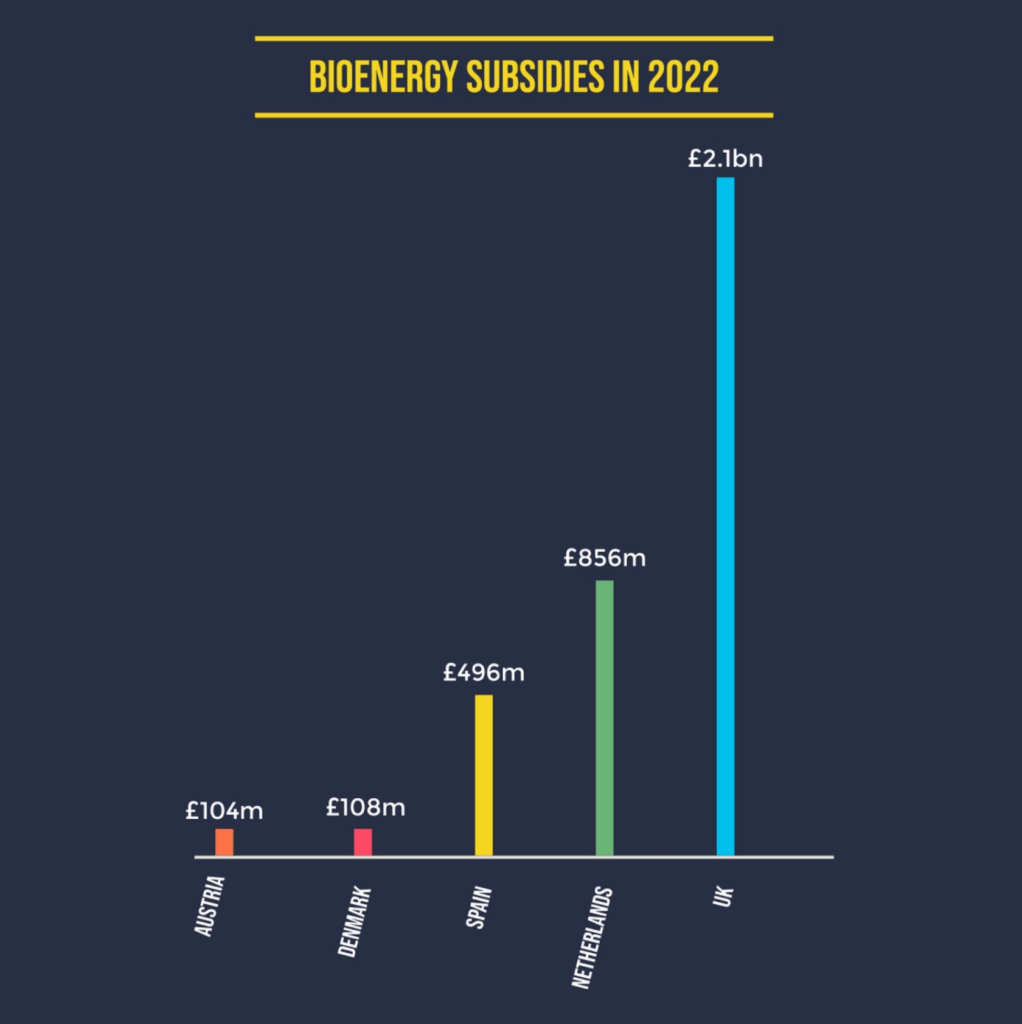
The UK is the top subsidiser of bioenergy in Europe. In 2024, Drax power station received £869 million in biomass subsidies. In 2021, the UK spent more than £2.1 billion on bioenergy subsidies, primarily to burn wood imported from overseas forests at Drax Power Station. On average, every person in Britain paid £30 to support the UK bioenergy industry.
Biomass subsidies are paid from an extra charge on household electricity bills, increasing overall electricity costs for British families. This means the British public is effectively paying a “bioenergy tax”to burn other countries’ forests. Climate think tank Ember estimated that subsidies to large biomass power plants cost UK energy billpayers more than £1 billion in 2020 — or almost £3 million a day. Ember also found that energy billpayers will spend £13 billion in direct support to large biomass power plants by 2027 (including £10 billion at Drax alone). In addition to these direct subsidies, biomass generators are receiving carbon tax breaks of £333 million a year.
Subsidies to biomass electricity are all the more shocking considering wind and solar power guarantees real emissions reductions and is readily available at a fraction of the cost. This means that while wind and solar help bring down energy bills much of the time, biomass increases bills.
Combined with battery storage, wind and solar could provide more than enough electricity for the UK, according to the University of Oxford. Studies have shown for years that biomass plants are uneconomic compared to these true renewable alternatives and unnecessary for ensuring the reliability of the UK electricity supply.
Biomass Subsidies Undermine Climate Action and a Green Recovery
Successive UK Governments have said they want to lead the world in tackling the climate emergency and protecting nature, but billions in subsidies for dirty biomass electricity directly undermine these plans.
In 2025 the UK Government announced that it will be extending subsidies for large biomass power plants like Drax after current contracts end in 2027. This will mean billions more in subsidies for biomass burning.
Resources
Explore these links to discover more about the cost of UK biomass subsidies.
Money to Burn II: Solar and Wind Can Reliably Supply the United Kingdom’s New Electricity Needs More Cost-Effectively Than Biomass
We are in the midst of a global biodiversity crisis, caused mainly by changes in land and sea use, including forest destruction and fragmentation. Since 1970, the planet has lost 60 percent of its vertebrate wildlife populations, leading experts to warn that the annihilation of wildlife threatens civilization. Scientists predict this crisis will become even more dire, with the United Nations’ Global Assessment Report on Biodiversity and Ecosystem Services finding that a million species face extinction. This biodiversity crisis is endangering not only wildlife, but humans as well. We depend on biodiversity for the food we eat, the water we drink, the air we breathe, the medicines we take, and stable weather patterns, among other benefits.
Unfortunately, logging for biomass energy is accelerating the threat to forests and wildlife while scientists are calling for “transformative change”—not business as usual—to save our planet and ourselves. As the world’s top importer and subsidizer of biomass, the UK plays a huge role in this destruction.
Logging to feed the UK biomass energy market is harming forests around the world, including in the United States, Estonia, Latvia, Lithuania, and Canada, further threatening already-imperiled wildlife and ecosystems.
In 2024 investigations showed that Drax had breached environmental regulations in the United States over 11,000 times and in Canada nearly 200 times, with some of those relating to air pollution.
Analysis by Cut Carbon Not Forests shows that the UK’s sourcing of biomass from Estonia likely doesn’t meet the UK’s actual sustainability criteria – because ecosystems and wildlife are not maintained or protected from harm.
Forests are among the most biodiverse places on the planet, providing homes for countless species.
Iconic wetland forest in the U.S. Southeast
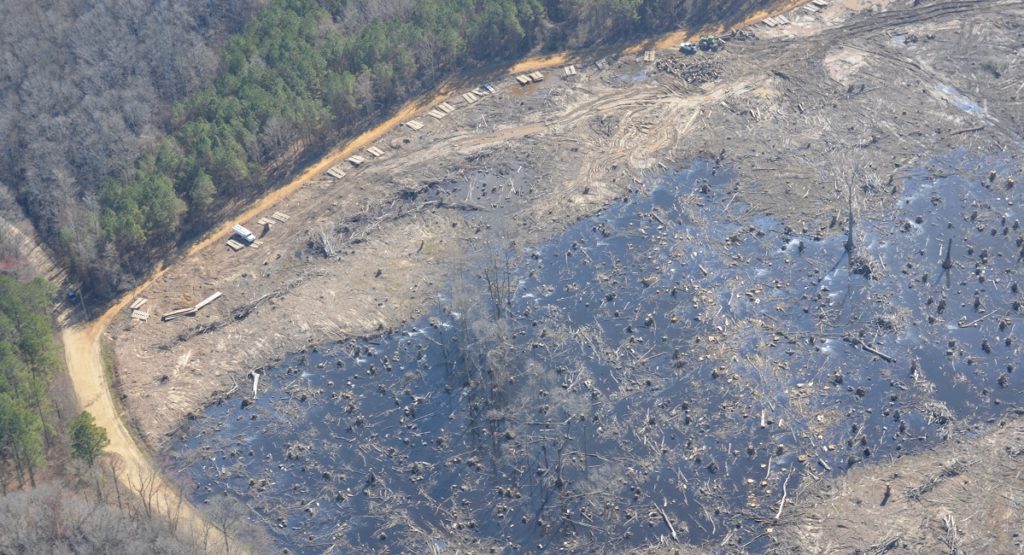
Wood used to produce biomass energy in the UK is logged using destructive and unsustainable practices like clearcutting. On-the-ground investigations into Enviva, the world’s largest wood pellet manufacturer and a top biomass supplier for Drax Power Station, routinely show wood from clearcuts of mature hardwood forests being used to make pellets.
A clearcut forest in the U.S. Southeast used to source trees for the biomass industry.
Clearcutting is even occurring in reserves designed to protect forests and rare and threatened species (e.g., European Union’s Natura 2000 network). Once a forest has been clearcut, it takes decades, if not centuries, before it can regrow to recover its original level of ecosystem productivity.
The scale of the impact is alarming. In 2024, approximately 5.8 million metric tons of wood pellets were exported from the United States to the UK to feed just a portion of the UK’s demand for biomass, requiring the clearing of an area larger than the New Forest. Each year, over a million acres of Canadian boreal forest are clearcut, in part to feed biomass demand. And between 2001 and 2019, Estonia’s Natura 2000 areas lost an area more than twice the size of Manhattan, due in part to biomass production.
Biomass Harms Wildlife
The forests being logged for biomass are some of the most ecologically rich and diverse in the world.
The North American Coastal Plain—where most UK biomass imports come from—is a global biodiversity hotspot, providing habitat for hundreds of imperiled species, including the red wolf, cerulean warbler, and Louisiana black bear.
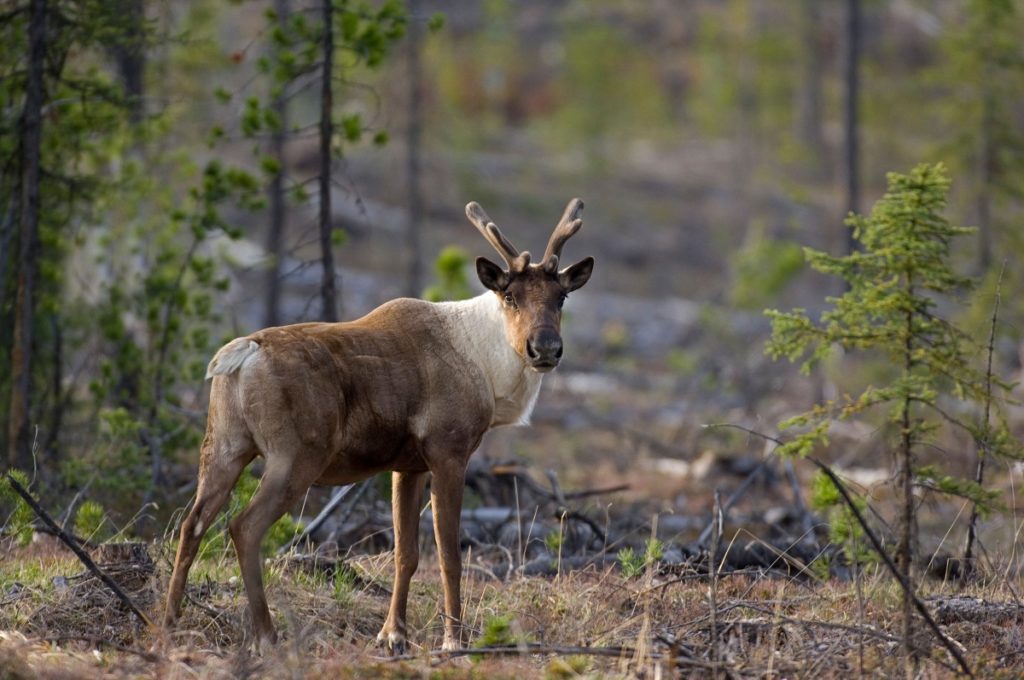
In Canada, logging for biomass is putting an additional strain on imperiled species like the Woodland Caribou, Canada Lynx, and pine marten. It’s also jeopardizing the over 3 billion birds that rely on the boreal for nesting and breeding, many of which are classified as “threatened with extinction by” the International Union for Conservation of Nature (IUCN).
Biomass is likewise adding pressure to log the last remaining old growth forests in Estonia and Latvia, which are critical for biodiversity conservation. These forests have experienced few major human impacts over the years and are thus unique local biodiversity hotspots, supporting species that cannot survive elsewhere like flying squirrels, capercaillie, and black stork. Many of these species are protected under national and/or EU legislation.
Amphibian biodiversity is concentrated in the southeastern U.S. where many species inhabit bottomland hardwood forests, including the Eastern Tiger Salmander (pictured here), the Gopher Frog, and the Three-Lined Salamander.
The Lithuanian government now allows logging in regional and national forest parks to meet biomass demand, despite their protected status, impacting many bird species listed as endangered in Lithuania’s Red Data Book like the Pygmy Owl, White-tailed Eagle, Black Grouse, and White-backed Woodpecker and prompting criticism from the European Commission.
Biomass Breaks the UK’s Promises on Biodiversity
The UK’s massive biomass electricity subsidies break its promises under the Convention on Biological Diversity requiring the elimination of subsidies harmful to international biodiversity.
It’s also hypocritical for the UK to commit to—and lead—the effort to protect at least 30% of its lands and seas by 2030 (an effort known as “30 by 30”) under the Convention on Biological Diversity when, through billions in subsidies for biomass, it is destroying other countries’ abilities to meet these targets.
The country’s reliance on biomass for industrial scale electricity generation is also incompatible with its 25-year Environment Plan, which states that the UK will establish “appropriate mechanisms to screen policies and strategies for potential negative environmental effects overseas.”
Resources
Explore these links to discover more about the climate impacts of burning trees for electricity.
Global Markets for Biomass Energy are Devastating North American Forests
Marginalised communities around the world—but especially in the U.S. Southeast—are paying the price for the UK’s continued reliance on biomass energy, including impoverished communities and communities of color.
Wood pellet manufacturing plants or “pellet mills”—where trees are processed into wood pellets to be burned—are 50% more likely to be sited in economically depressed areas of color. These same communities are disproportionately targeted for the siting of other dirty industries, such as coal and natural gas plants, waste-to-energy plants, and landfills.
Biomass companies like Drax have been fined repeatedly for breaching air pollution limits.
In 2025 Mississippi Department for Environmental Quality declined an application by Drax to become a ‘major’ polluter, which would have allowed it to increase the volume of Hazardous Air Pollutants its wood pellet mills release.
Aerial view of Drax Amite plant in the Blackmon Hole Mobile Home Park, Gloster, MS [(C) People’s Justice Council & Rev. Michael Malcom]
Pellet mills emit hazardous or toxic air pollutants that are known to cause cancer and other serious health impacts even at relatively small amounts. A 2018 report by the Environmental Integrity Project found that 21 wood pellet mills exporting to the European Union emit thousands of tons of fine particulate matter or PM2.5 (fine dust), carbon monoxide, nitrogen oxides (smog), and volatile organic compounds (VOCs) every year, which the U.S. Environmental Protection Agency associates with illnesses ranging from respiratory and heart disease to cancer to slowed lung function in children.
While each of these pollutants has serious health or environmental impacts, PM2.5 is especially harmful to human health, causing up to 200,000 excess deaths in the United States every year. PM2.5 consists of tiny airborne particles that can pass deep into a person’s lungs and even into the bloodstream, causing heart attacks, decreased lung function, worsening asthma symptoms, and leading to premature death, especially among people of color. In Northampton County, North Carolina, where the world’s largest pellet producer, Enviva, owns a pellet mill, more than one in ten adults suffered from asthma in 2018 and residents describe a constant cloud of dust flowing from the plant onto their homes, cars, gardens, and into their lungs.
Rally during the Save our Southern Forests tour in Chesapeake, Virginia. Belinda Joyner (center) takes the mic to share the story of community impacts by Enviva in her home of Garysburg, N.C. (Dogwood Alliance)Rally against biomass exports in Wilmington, North Carolina (Dogwood Alliance)
The National Association for the Advancement of Colored People (NAACP) found that African Americans who live near biomass power plants are more likely to suffer from increased exposure to many dangerous emissions, such as smog, asbestos, sulfur dioxide, and other toxins, than any other racial group in America. For this reason, several southern chapters of the NAACP opposed the siting of wood pellet production facilities in their communities, with one Georgia chapter stating that the siting of such a facility in their community was “a clear cut example of environmental racism.”
“Most of these facilities, they come into areas like mine: Black neighborhoods where people, they just aren’t going to fight. They’re tired of fighting over and over and over.”
—Rev. Richie Harding, founder of Gaston Youth
Despite these horrible health impacts on nearby communities, one-third of pellet mills in the U.S. South were in violation of emissions limitations set in their permits in 2017, according to the Environmental Integrity Project report. In fact, violations of air quality laws have resulted in numerous enforcement actions, fines, and community-led lawsuits against pellet mills in the U.S. Southeast. For example, Drax has been cited for serious air quality violations at all three of its U.S. pellet mills and was fined $2.5 million dollars at one of these mills for air pollution three times above the legal limit.
The logging of forests around the pellet mills is also concerning because of the critical ecosystem services the trees provide to surrounding communities. Trees remove nutrients and other pollutants from water, meaning logging is negatively impacting water quality in marginalized communities. Intensive logging in these areas also leaves nearby communities more vulnerable to increasingly frequent extreme weather events caused by climate change.
“I use the term dumping ground to describe our area…We’re predominantly Black, and big industries just feel they can do what they want.”
Belinda Joyner, a 72-year-old local activist fighting the biomass industry in Northampton County, North Carolina
Forests—particularly wetland forests like the ones being logged for biomass in the U.S. Southeast—act as storm buffers, shielding communities from floods and hurricanes. Without these trees, nearby communities are unprotected. For example, Northampton County residents say that two-inch rains now spike flood waters as much as a four-inch rain did a decade ago. Reports from the Cape Fear River—downstream from Enviva’s Sampson, North Carolina, plant—have reported similar findings, with local river guide Charles Robbins stating: “The storms are getting stronger, yes, but there’s also a lot fewer trees to pull water from the river.”
Resources
Explore these links to discover more about the climate impacts of burning trees for electricity.
State enforcement actions against southern pellet mills for air permit violations
Biomass electricity is dirty energy. Like fossil fuels, burning biomass in power stations emits huge amounts of heat-trapping carbon dioxide and exacerbates climate change. We must end subsidies to this polluting energy source now.
Addressing the climate emergency means immediately shifting to clean energy and dramatically slashing carbon emissions over the next decade. No energy source that puts more carbon dioxide into the atmosphere over this critical period should continue to get government subsidies.
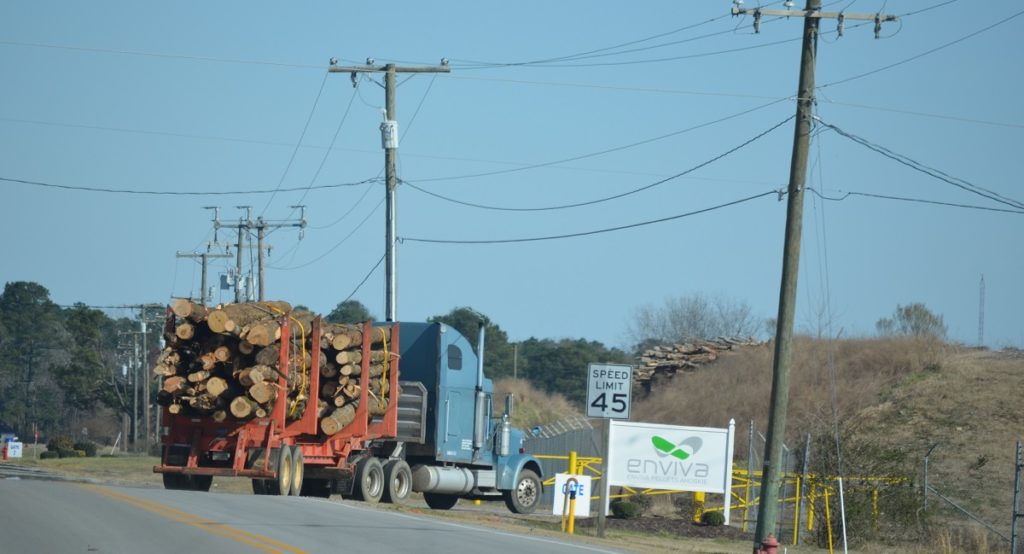
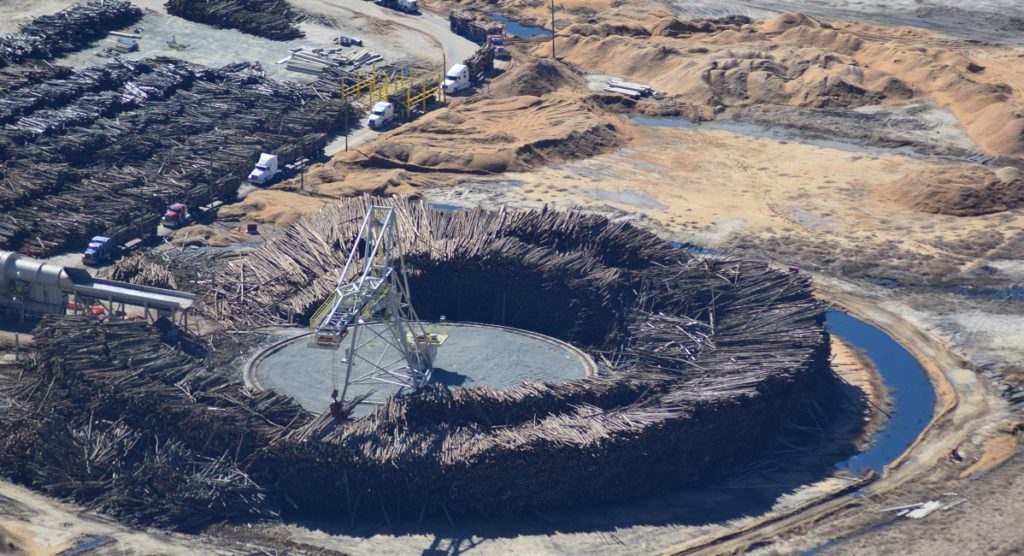
A clearcut located in the Roanoke River basin in North Carolina, just outside of Williamston, North Carolina. Whole hardwood trees and other large-diameter wood from this site was taken to the Enviva Ahoskie, North Carolina wood pellet mill.Logging truck entering Enviva’s Ahoskie wood pellet plant, 2016, Credit: Dogwood AllianceLog pile at Enviva’s Sampson County wood pellet plant, 2017, Credit: Dogwood Alliance
Burning Biomass for Electricity Emits Heat-Trapping CO2 at Every Step
The climate impacts of harvesting and burning biomass from forests in power stations are well established. In addition to the large supply chain emissions in processing and transporting wood pellets to the UK from overseas forests, all biomass power plants emit more CO2 from their stacks than coal plants do per unit of electricity. This means that bioenergy, which the UK treats as a “zero emitting” source of electricity, actually increases CO2 in the atmosphere.
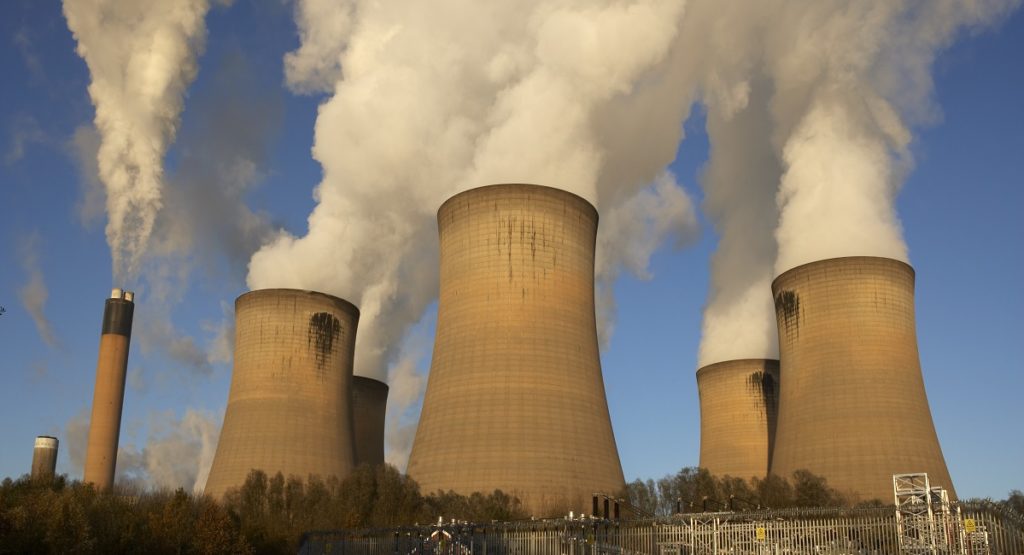
Drax Power Station in North Yorkshire England
Bioenergy proponents argue that forest regrowth negates this harmful impact on our climate. That is simply not true, even under the best-case scenario in which new trees are immediately replanted to replace those that have been logged.
This is for three reasons:
Older trees absorb more carbon dioxide than younger ones. Cutting down old trees and burning them, and replacing them with young trees, leaves the forest absorbing less carbon than before. Overall the climate is worse off. Not only will it take years (likely decades) for the new tree to reach the size of the felled one, but during that time the now felled tree would have grown even larger if it had been left in place.
It is difficult to ensure that harvested trees will be replaced and kept intact.
Forest harvesting also releases carbon from the soil.
Together, this means that harvesting biomass from forests for energy has an immediate and negative impact on the climate, with consequences that can persist for decades or even centuries. Even when biomass energy is generated by burning genuine forestry residues—the leftovers from logging operations, like tree tops and limbs—the result is increased CO2 in the atmosphere over several decades. This is time we simply do not have if we are going to avert the worse consequences of climate change.
Biomass Undermines the UK’s Plans to Lead on Climate Action
Britain’s COP 26 President Alok Sharma says climate change is the biggest challenge of our time, and that the UK’s presidency offers a unique opportunity to address this. Yet the UK is actively undermining this ambition and worsening the climate crisis by continuing billions in subsidies for dirty biomass electricity—the opposite of global leadership.
The European Academies Science Advisory Council (EASAC) now states that using woody biomass for power “is not effective in mitigating climate change and may even increase the risk of dangerous climate change.”
The UK cannot claim the mantle of global climate leadership while it remains the world’s largest market for burning trees for energy. Continuing to subsidise wood-burning for electricity puts the country’s climate goals in jeopardy. The UK government must immediately redirect billions in dirty biomass electricity subsidies to true clean energy like wind and solar.
Resources
Explore these links to discover more about the climate impacts of burning trees for electricity.
Global Markets for Biomass Energy are Devastating North American Forests
We use cookies to personalize content and ads, to provide social media features and to analyse our traffic. We also share information about your use of our site with our social media, advertising and analytics partners.
Functional
Always active
The technical storage or access is strictly necessary for the legitimate purpose of enabling the use of a specific service explicitly requested by the subscriber or user, or for the sole purpose of carrying out the transmission of a communication over an electronic communications network.
Preferences
The technical storage or access is necessary for the legitimate purpose of storing preferences that are not requested by the subscriber or user.
Statistics
The technical storage or access that is used exclusively for statistical purposes.The technical storage or access that is used exclusively for anonymous statistical purposes. Without a subpoena, voluntary compliance on the part of your Internet Service Provider, or additional records from a third party, information stored or retrieved for this purpose alone cannot usually be used to identify you.
Marketing
The technical storage or access is required to create user profiles to send advertising, or to track the user on a website or across several websites for similar marketing purposes.